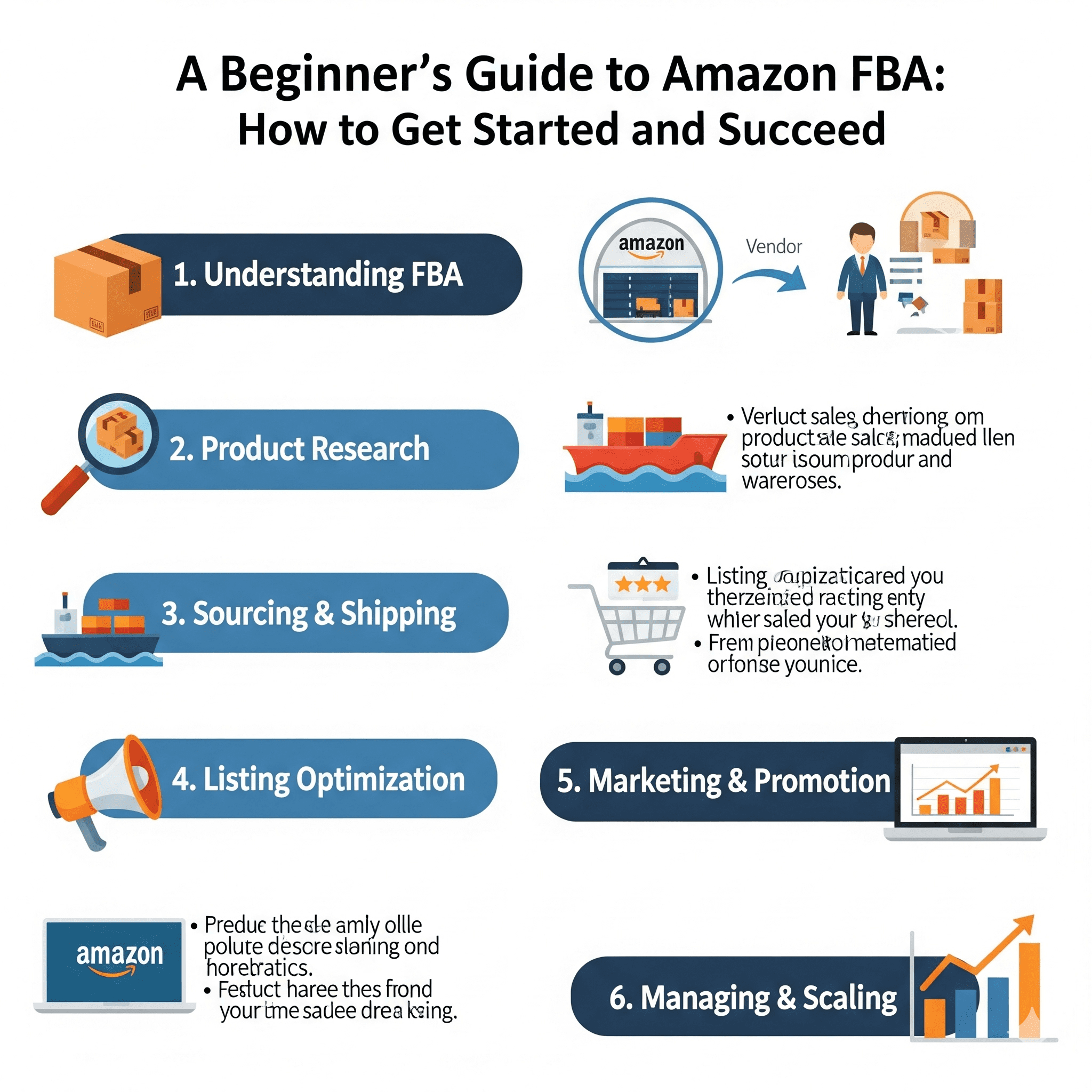
Introduction to Amazon FBA
Starting an Amazon FBA (Fulfillment by Amazon) business can be an exciting venture, offering the potential for significant income and the freedom to work from anywhere. However, navigating the process, especially for beginners, can seem daunting. With millions of products and sellers on the platform, standing out requires a well-thought-out strategy. In this guide, we’ll walk you through the basics of Amazon FBA, from setting up your account to creating a product listing that sells. We’ll also delve into choosing a profitable niche, managing inventory, and avoiding common pitfalls that new sellers often face.
Understanding Amazon FBA
Before diving into the how-to, it’s essential to understand what Amazon FBA is. Fulfillment by Amazon allows businesses and individuals to sell their products through Amazon, leveraging its massive customer base and logistical capabilities. When you sell through FBA, Amazon handles packaging, shipping, and customer service for your products, making it easier for you to focus on marketing and growing your business.
Benefits of Using Amazon FBA
- Trust and Credibility: Selling through Amazon gives your products an instant credibility boost, as customers trust Amazon’s quality and service standards.
- Access to Prime Customers: Your products become eligible for Amazon Prime, which means faster shipping for Prime members, potentially increasing sales.
- Hands-off Fulfillment: Amazon handles storage, packaging, and shipping, freeing you from logistical headaches.
- Customer Service: Amazon handles customer inquiries and issues, saving you time and resources.
Setting Up Your Amazon Seller Account
To start selling on Amazon, you need to set up a professional seller account. This involves:
- Going to sellercentral.amazon.com and creating an account.
- Verifying your email address and providing basic business information.
- Setting up your store and profile, including a professional profile picture and bio.
- Choosing your plan: Individual or Professional. The professional plan is $39.99/month and is worth it if you plan to sell more than 40 items per month.
Choosing a Profitable Niche
Selecting the right niche is crucial for your success on Amazon. A profitable niche should have:
- Low Competition: Easier to stand out and rank higher in search results.
- High Demand: Products that people are actively looking for and buying.
- Good Profit Margins: Ensure that after all costs, you make a decent profit per unit.
Tools for Finding a Niche
- Amazon Best Sellers: See what’s currently popular on Amazon.
- Google Trends: Understand what people are searching for and trending topics.
- Helium 10, Jungle Scout, or AMZScout: Tools specifically designed for Amazon sellers to find profitable products and niches.
Creating a Product Listing That Sells
A good product listing should include:
- Accurate and Detailed Product Title: Includes the brand, product name, and key features.
- High-Quality Product Images: Show the product from different angles, in use, and any unique features.
- Detailed and Honest Product Description: Include specifications, features, and benefits.
- Keywords: Use relevant keywords that buyers might use when searching for your product.
Writing a Compelling Product Description
When writing your product description, consider the following tips:
- Be concise: Keep it short and to the point, focusing on the key benefits and features.
- Use bullet points: Easy to read and understand, perfect for highlighting features and specs.
- Include a call to action: Encourage buyers to purchase by creating a sense of urgency or offering a guarantee.
Managing Your Inventory and Orders
Effective inventory management is key to avoiding stockouts and overstocking, both of which can negatively impact your business. Amazon offers various tools and services to help manage your inventory, including:
- FBA Inventory Management: Allows you to track your stock levels, set reminders for low-stock items, and manage returns.
- Inventory Performance Index (IPI): A metric that measures your inventory management performance, with a higher score indicating better management.
Tips for Efficient Inventory Management
- Monitor your stock levels regularly to avoid running out of stock or having too much inventory.
- Use Amazon’s inventory management tools to streamline your process.
- Plan for seasonal fluctuations in demand to avoid overstocking or understocking.
Marketing and Promoting Your Products
Marketing is crucial for increasing visibility and driving sales. Here are some strategies:
- Amazon Advertising: Use sponsored products and sponsored brands to increase your product’s visibility.
- Reviews: Encourage satisfied customers to leave reviews, as they significantly impact your product’s credibility and ranking.
- Social Media: Leverage platforms like Facebook, Instagram, and Twitter to promote your products and engage with potential customers.
Building a Brand on Amazon
- Consistent Branding: Ensure all your product listings and packaging reflect your brand’s identity.
- High-Quality Products: Focus on delivering excellent products that meet or exceed customer expectations.
- Customer Service: Respond promptly to customer inquiries and resolve issues professionally.
Common Mistakes to Avoid
- Poor Product Research: Not adequately researching your product and niche can lead to failure.
- Inaccurate Listings: Incorrect or misleading product listings can result in penalties from Amazon.
- Ignoring Customer Reviews: Failing to respond to customer reviews and feedback can harm your reputation and sales.
Frequently Asked Questions
Q: How much does it cost to start selling on Amazon FBA?
A: The cost can vary depending on the products you sell, shipping costs, and Amazon’s fees. However, you can start with minimal initial inventory and scale up as you grow.
Q: How long does it take to get started with Amazon FBA?
A: Setting up your account and listing your first product can take a few days to a week. However, finding the right product and niche can take longer, depending on your research and decision-making process.
Q: Can I sell used or refurbished products on Amazon FBA?
A: Yes, Amazon allows the sale of used and refurbished products, but they must meet certain conditions and be clearly labeled as such in your listings.
Conclusion
Starting an Amazon FBA business requires careful planning, execution, and ongoing optimization. By following the steps outlined in this guide, you can set yourself up for success. Remember, choosing the right niche, creating compelling product listings, and providing excellent customer service are key to thriving in the competitive Amazon marketplace. Don’t be afraid to experiment, learn from your mistakes, and adapt to changes in the market and on the Amazon platform. As you embark on your Amazon FBA journey, keep in mind that success rarely happens overnight. It’s a marathon that requires patience, persistence, and a willingness to learn and improve continuously. With the right mindset and strategies, you can build a profitable and sustainable business on Amazon.
Now that you have a comprehensive understanding of how to get started with Amazon FBA, it’s time to take action. Start by setting up your seller account, researching your niche, and planning your product lineup. Don’t hesitate to reach out to Amazon seller communities or forums for support and advice from experienced sellers.